3D Anatomy
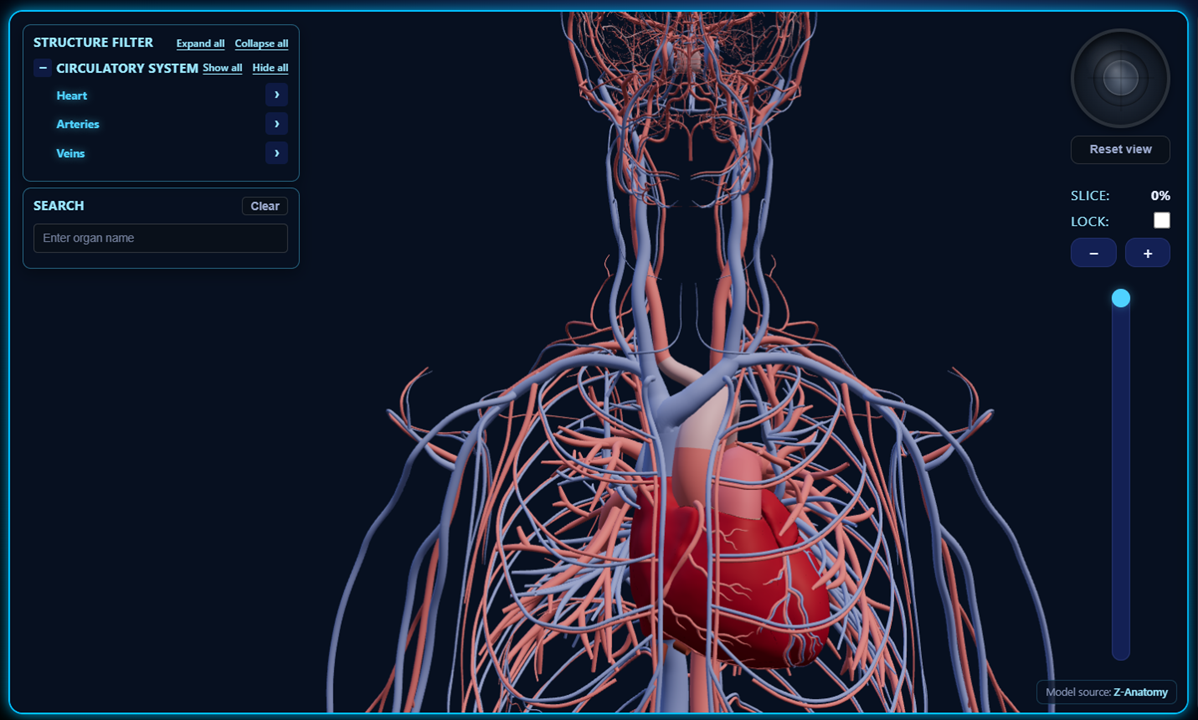
Explore and learn about all of the major systems in the human body using a detailed 3D model, then test your knowledge with the quizzing function.
Acid-base titrations
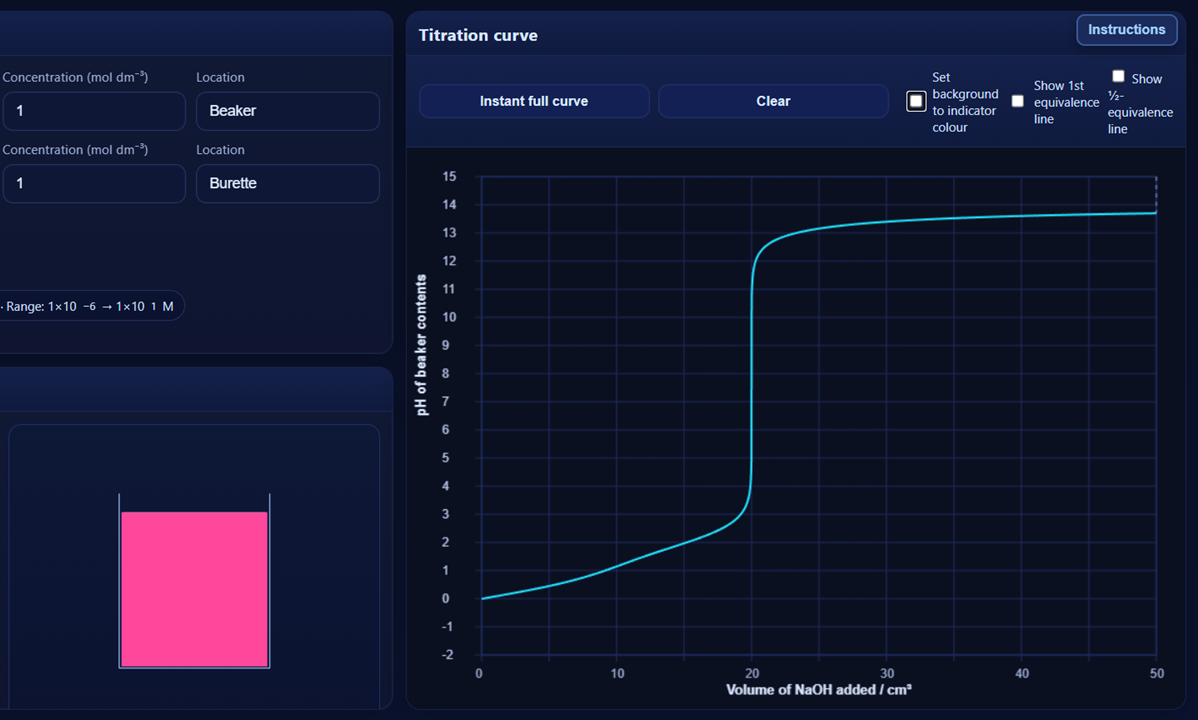
Simulate titrations and plot titration curves for a wide range of strong and weak acids and bases, including some polyprotics. Includes a number of different indicators.
Advanced chemistry calculations [Beta]
![Advanced chemistry calculations [Beta] screenshot](/apps/advancedchemistrycalculations/screenshot.png)
The purpose of this app is to produce calculation problems covering all aspects of IB and A-Level (AQA) Chemistry. The app currently only has stoichiometry/moles type problems, but I am adding more all the time.
Advanced electron configuration

Explore and understand the advanced electron configuration of the atoms and ions of all of the chemical elements, including an “electrons-in-boxes” energy level charts and an illustrative 3D model of the orbitals.
Advanced physics calculations
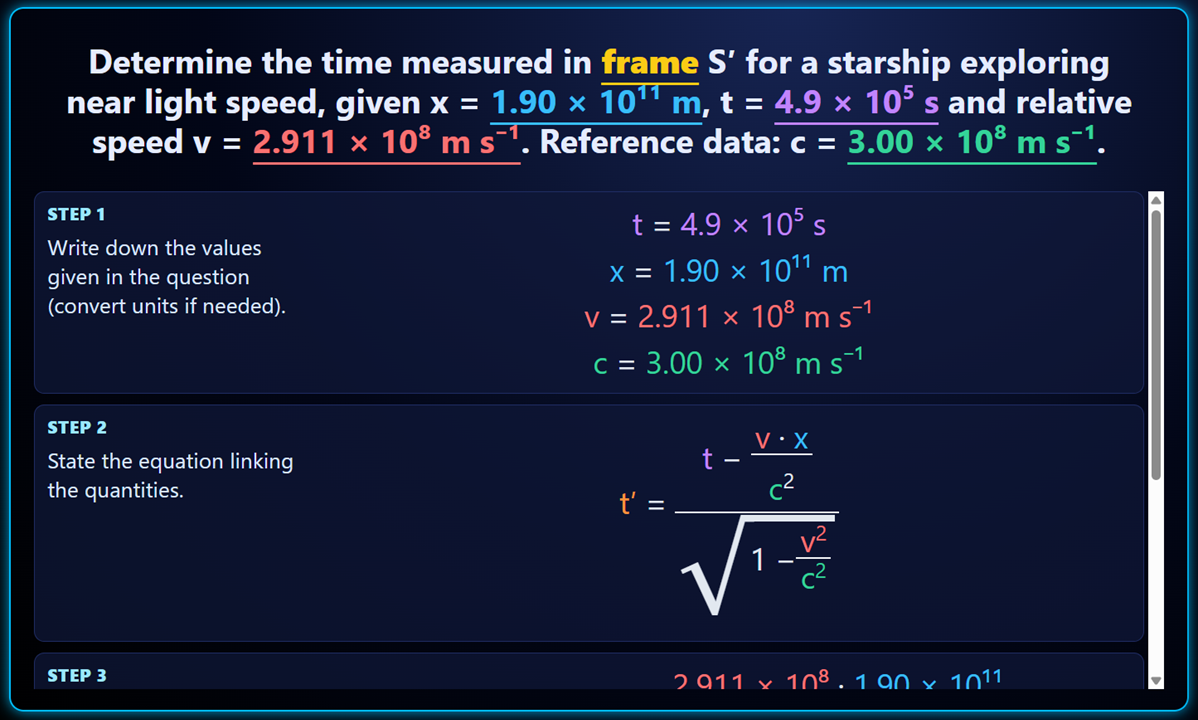
The purpose of this app is to produce calculation problems covering all equations found in the IB and (AQA) A-Level physics courses, with full worked solutions to help you understand them. It will also produce printable worksheets with answers keys.
Antibiotic resistance
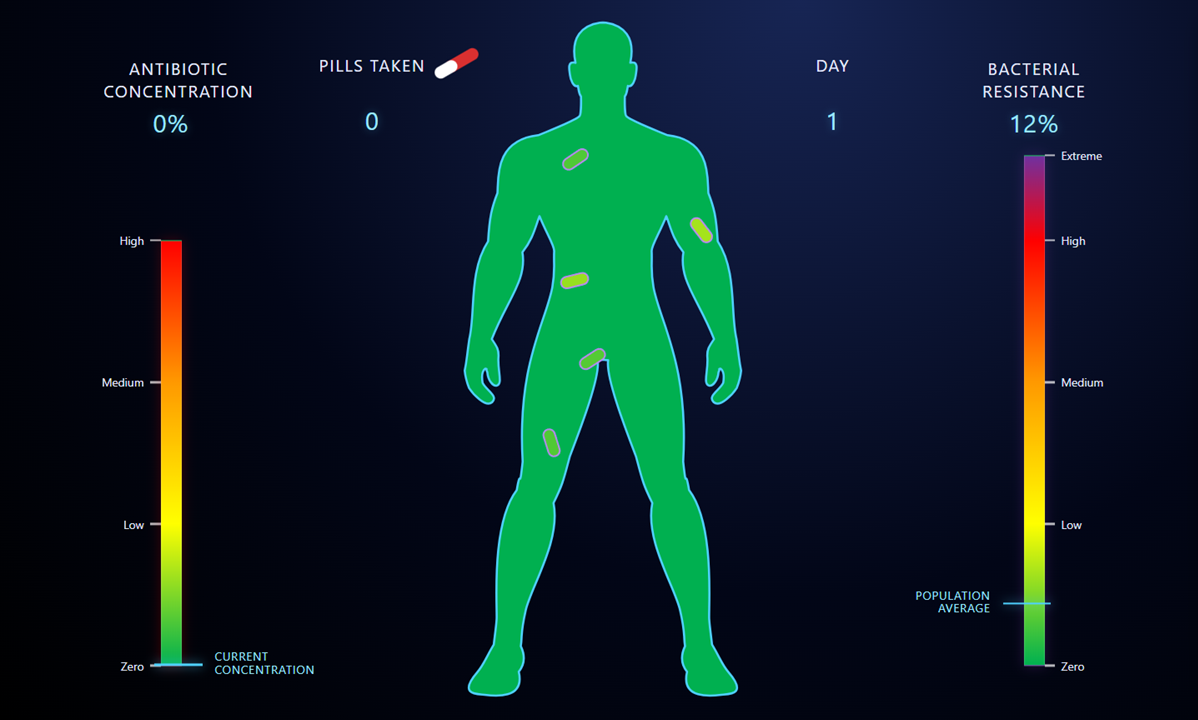
Explore how taking antibiotics creates a selection pressure towards developing resistance.
Covalent bonding
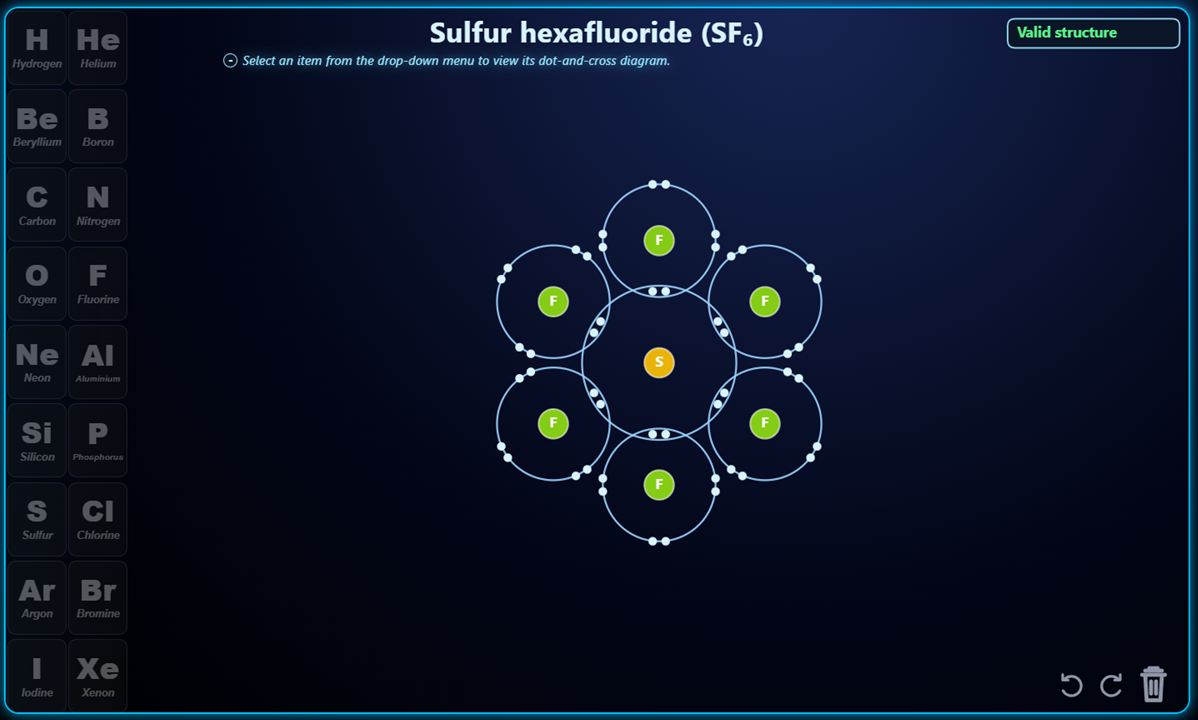
Produce dot-and-cross diagrams for a wide range of covalent compounds (including those with expanded and incomplete octets) and model them in 3D, expoloring their geometry, bond angles and polarity.
Diffusion
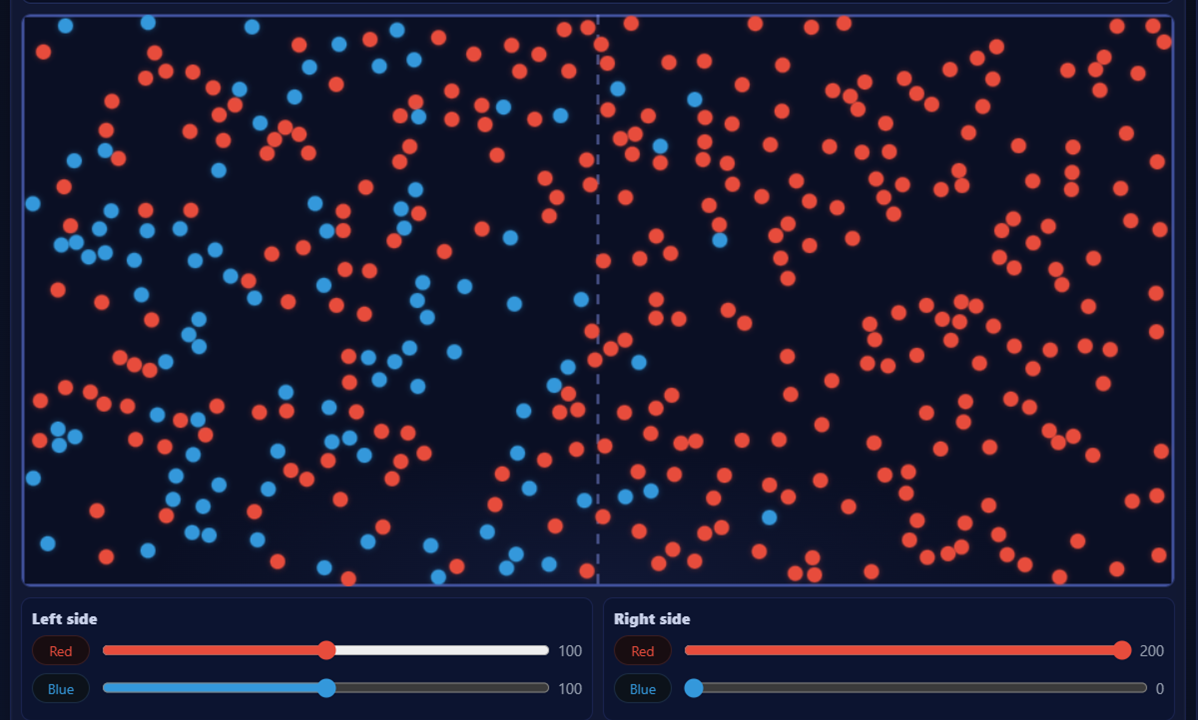
Explore diffusion starting with the basics and then explore the effects of membrane thickness, surface area and flow-rate on the rate of diffusion, including a function for running controlled experiments and collecting data from them.
Electric circuits [Beta]
![Electric circuits [Beta] screenshot](/apps/electric-circuits/screenshot.png)
Build and test circuits using a wide range of circuit components including lamps, switches, resistors, LDRs, thermistors and more. Explore the potential difference, current and resistance and any point in the circuit, and select from a range of pre-built circuits illustrating key principles. Note: This sim is still under development, with additional features planned; some more complex features such as the op-amp may behave inconsistently at times.
Electrolysis
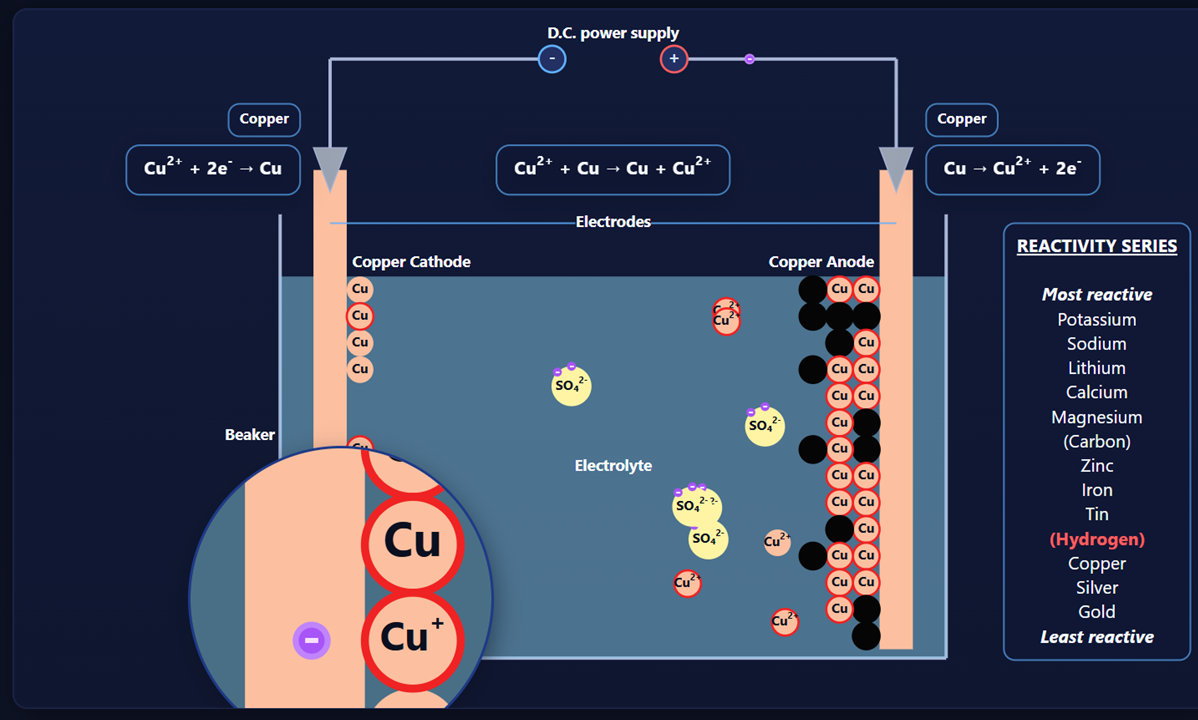
Model the electrolysis of molten and aqueous electrolytes, seeing both ion and electron movement, and the full and half-equations taking place. Explore the electrolysis of copper sulfate with pure and impure copper electrodes.
Electromagnetism
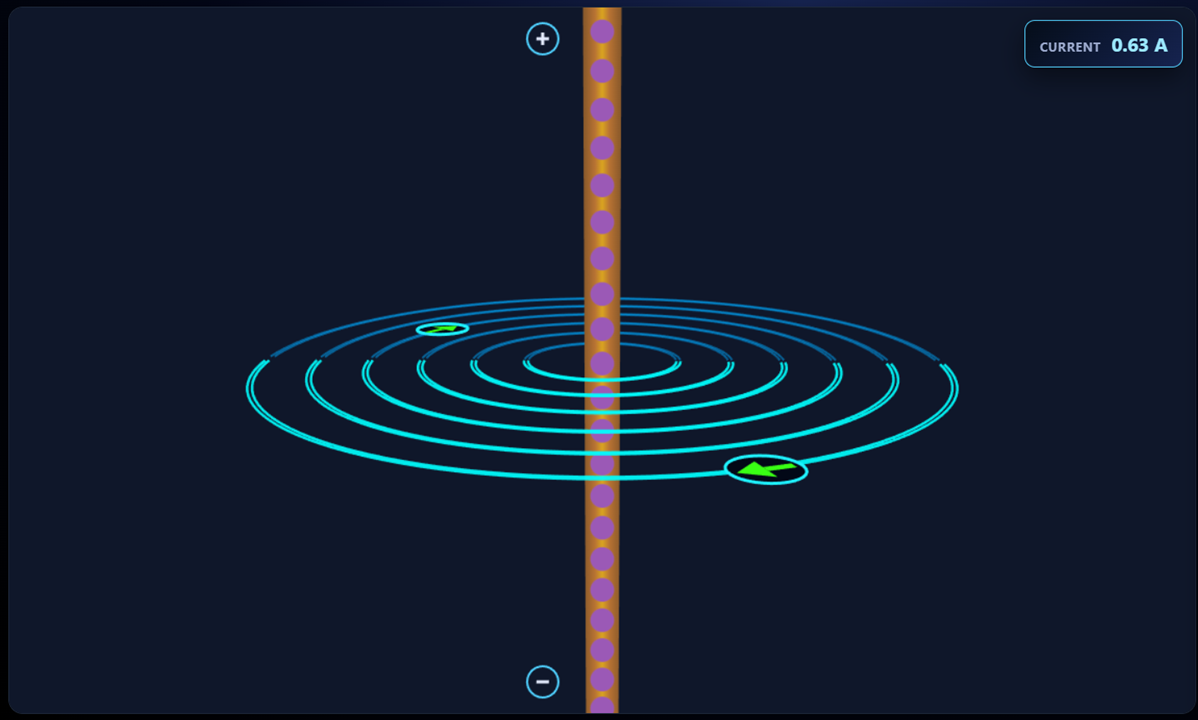
Visualise the magnetic field in a straight wire and a solenoid, and explore how changing the potential difference and the number and direction of turns in the coil affects the size and direction of the magnetic field.
Electron excitation
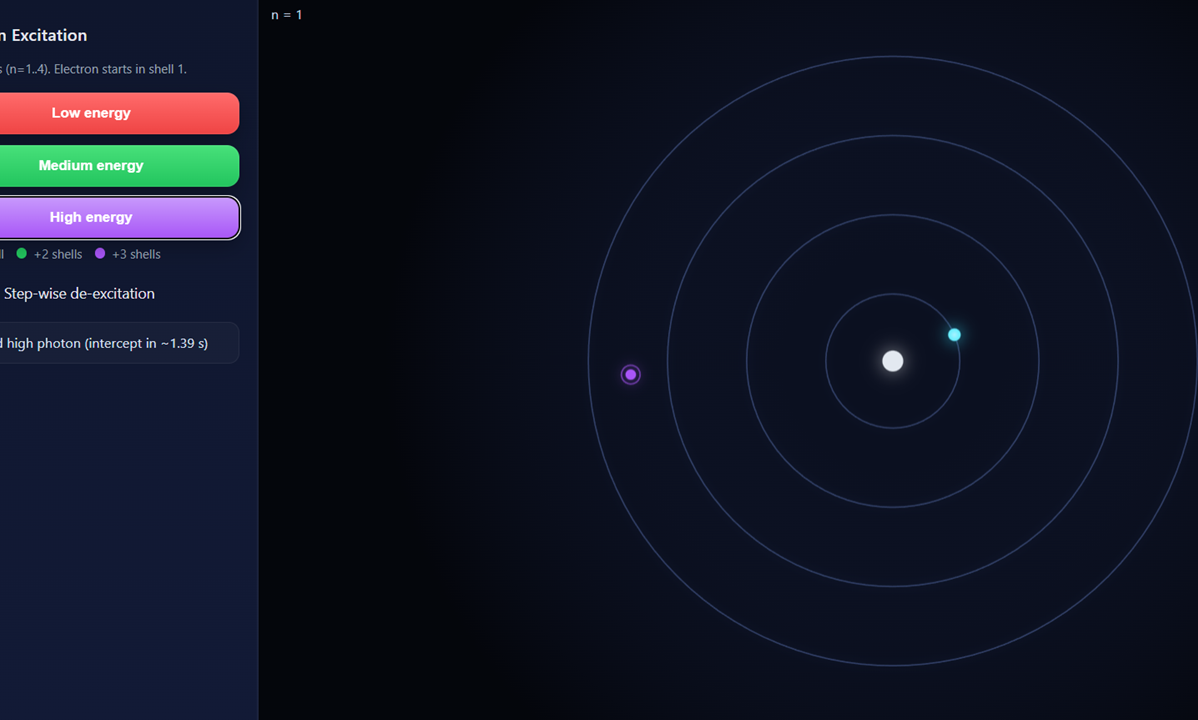
Visualise how atoms absorb and emit photons of light though electron excitation and relaxation. This was the first one I made so it is a little basic, but I will upgrade one day!
Enzymes
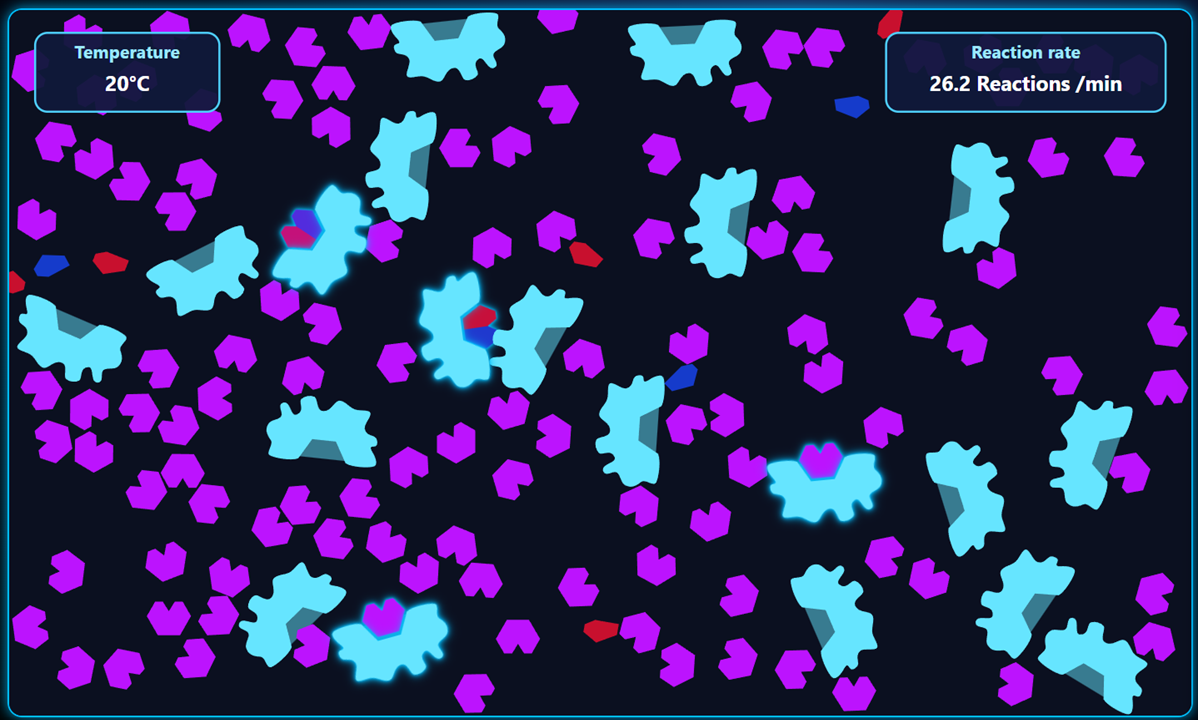
The purpose of this simulation is to visually model how enzymes work and the main factors that affect their activity. There are two main modes: Basic which introduces the two main models of enzyme action and Advanced mode which allows you to systematically investigate the effects of temperature, pH, substrate concentration, competitive inhibitors and non-competitive inhibitors. Note: The aim of this sim is not to produce perfect mathematical models of enzyme action, but to provide a visual physical model, from which largely realistic behaviours emerge, so that students can internalise the key principles involved.
Evolution and selective breeding
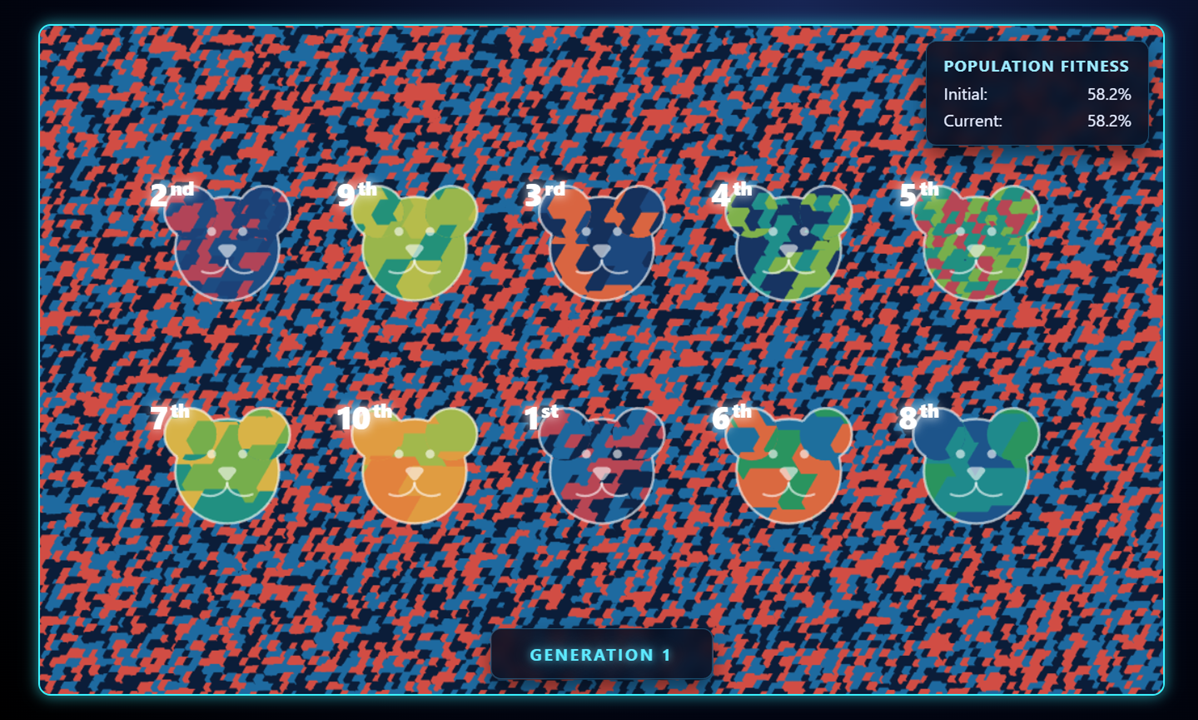
Model evolution by changing the appearance of an organism's environment and watching how the processes of natural selection, inheritance and mutation vary their appearance over time. Select which organisms with the characteristics you want to breed and see them change over time.
Gas pressure

Explore the factors affecting the pressure of a gas. The pressure is visualised as pink flashes each time a gas particle strikes the surface of the container, and the pressure gauge at the top right gives an overall measurement of the pressure.
GCSE Revision Flashcards [Beta]
![GCSE Revision Flashcards [Beta] screenshot](/apps/flashcards/screenshot.png)
This app contains flashcards suitable for Edexcel GCSE Combined Science. At the moment, it just contains core knowledge suitable to achieve up to about a grade 6-6. Over time I will add more.
Half-life
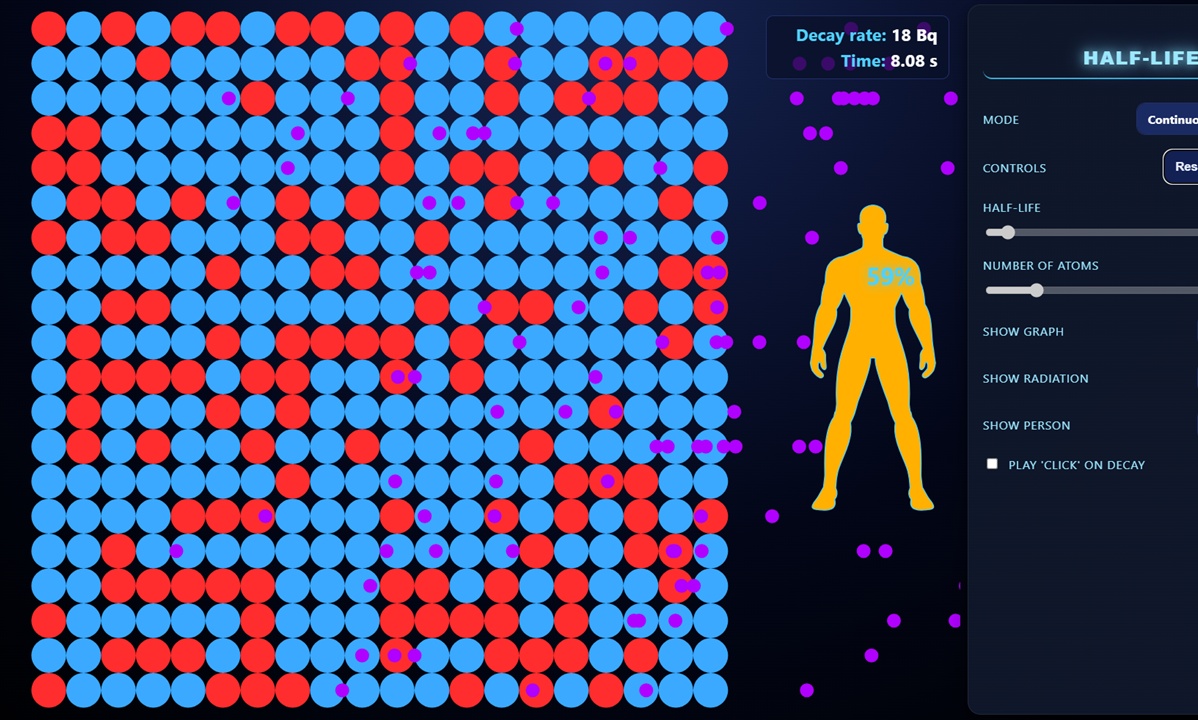
Watch and graph the decay of atoms, varying the number of atoms and their half-life. Includes 'Continuous' mode where you can watch the decay happen in real-time, and 'Step-wise' mode which lets you advance time by specific intervals to explore the maths.
Induction and the motor effect
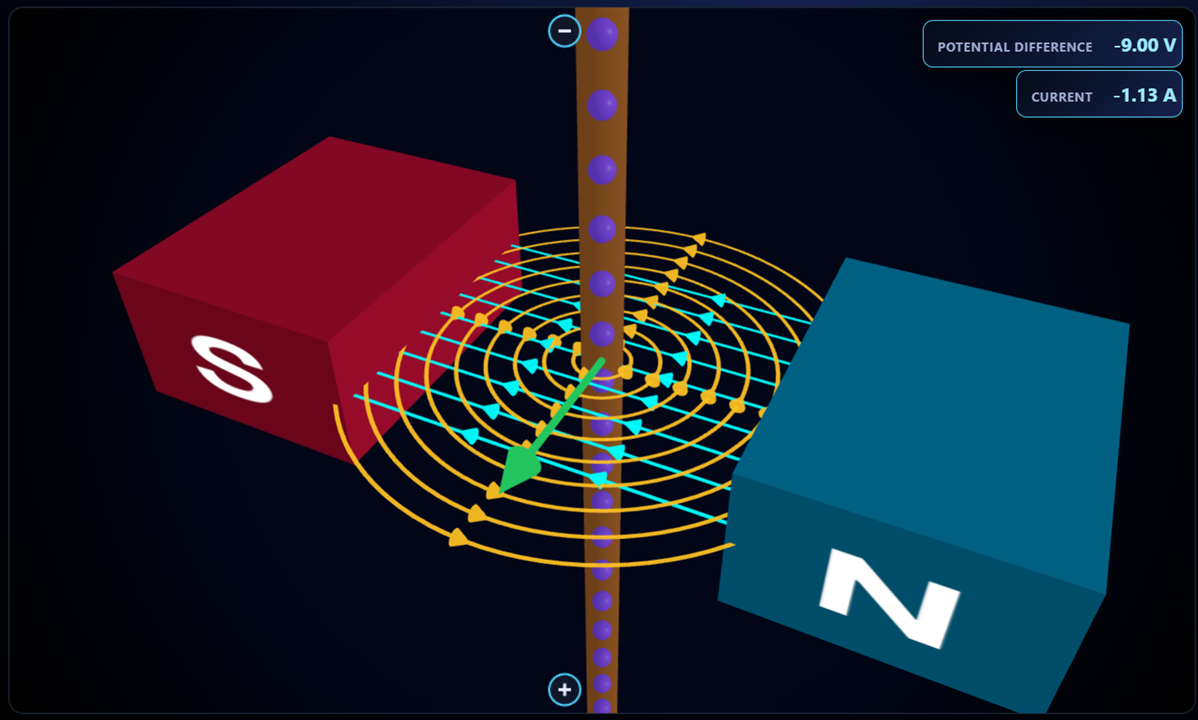
Visualise the forces produced by the motor effect (straight wire, uniform field) and explore the effect of varying the length of the wire, the strength and direction of the external magnetic field and the current in the wire. Visualise the magnetic field produced by moving a magnet into a solenoid, and explore the effect of magnetic field strength, movement speed, number of coils and coil direction on the field produced.
Insulin and diabetes

Explore how blood glucose concentrations are controlled by the hormones insulin and glucagon, including the effect of diet and exercise and both type 1 and type 2 diabetes.
Isotopes and radioactivity

Explore most of the 3000+ known isotopes of the chemical elements, exploring the patterns in their stability and visualising the ways they decay. Explore how to calculate relative atomic mass, visualising the abundance of the each of the isotopes of an element.
Magnets and magnetic fields
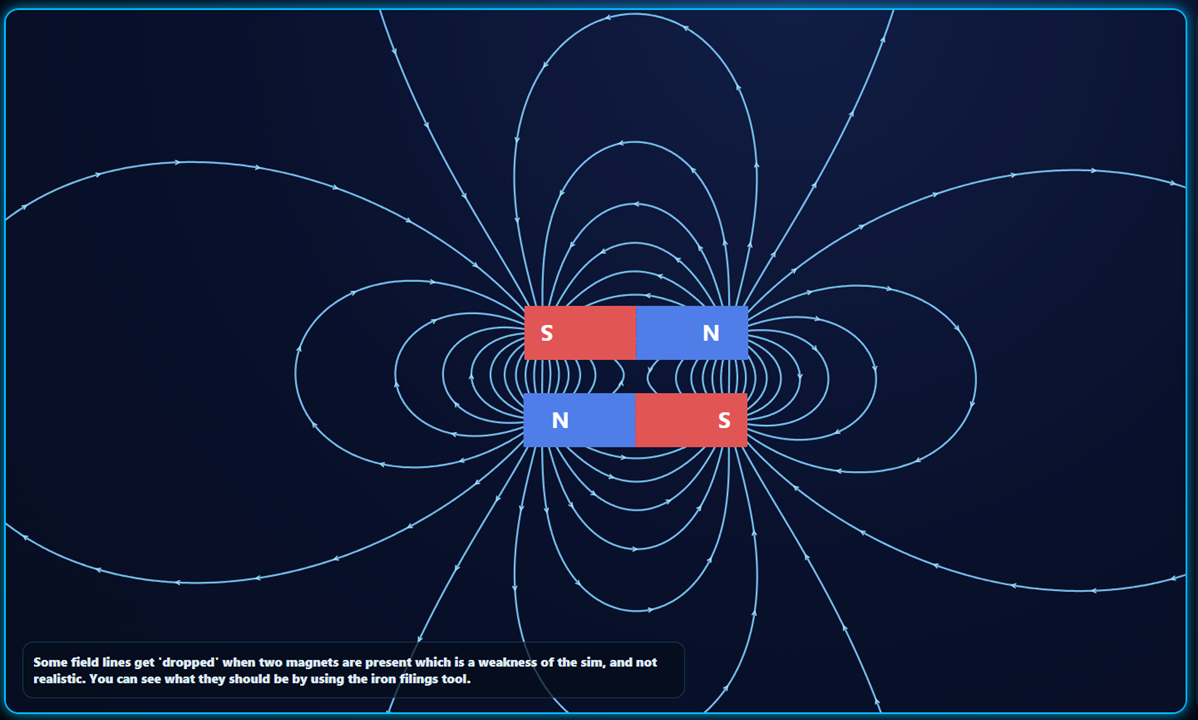
The aim of this simulation is to help you understand the key ideas of magnets, including both permanent and induced magnets, magnetic fields, and how compasses and metal objects respond to magnetic fields.
Metallic bonding
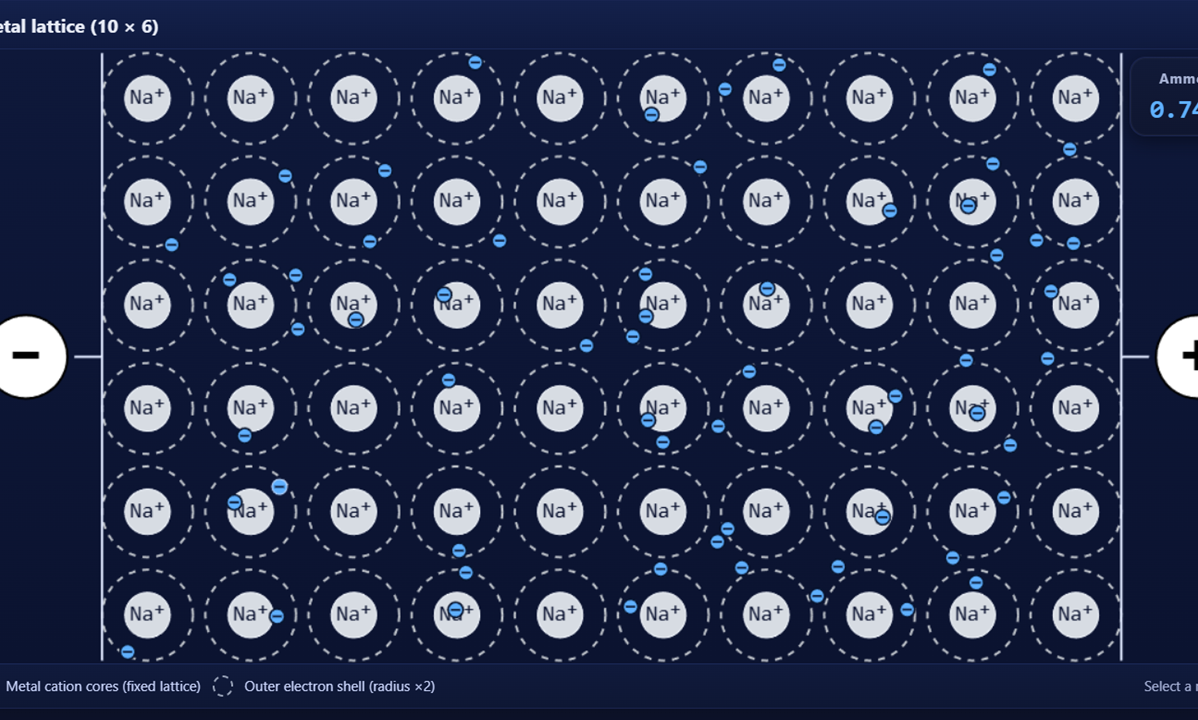
Visualise the delocalisation of electrons with metallic bonding, and explore how metals conduct when a potential difference is applied.
Molecular shapes
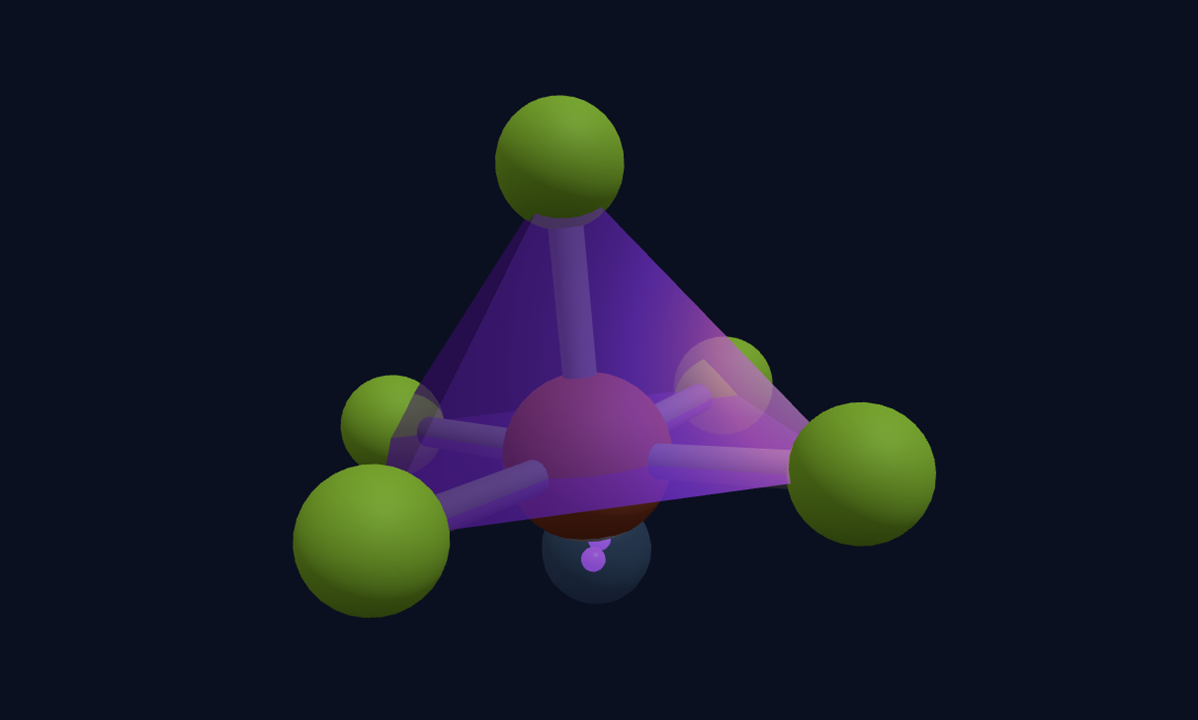
Construct molecules with up to six electron domains around a central atom - including both bonds and lone-pairs - and explore their shapes and bond angles; alternatively, select from a wide range of pre-built molecules.
Motion Graphs
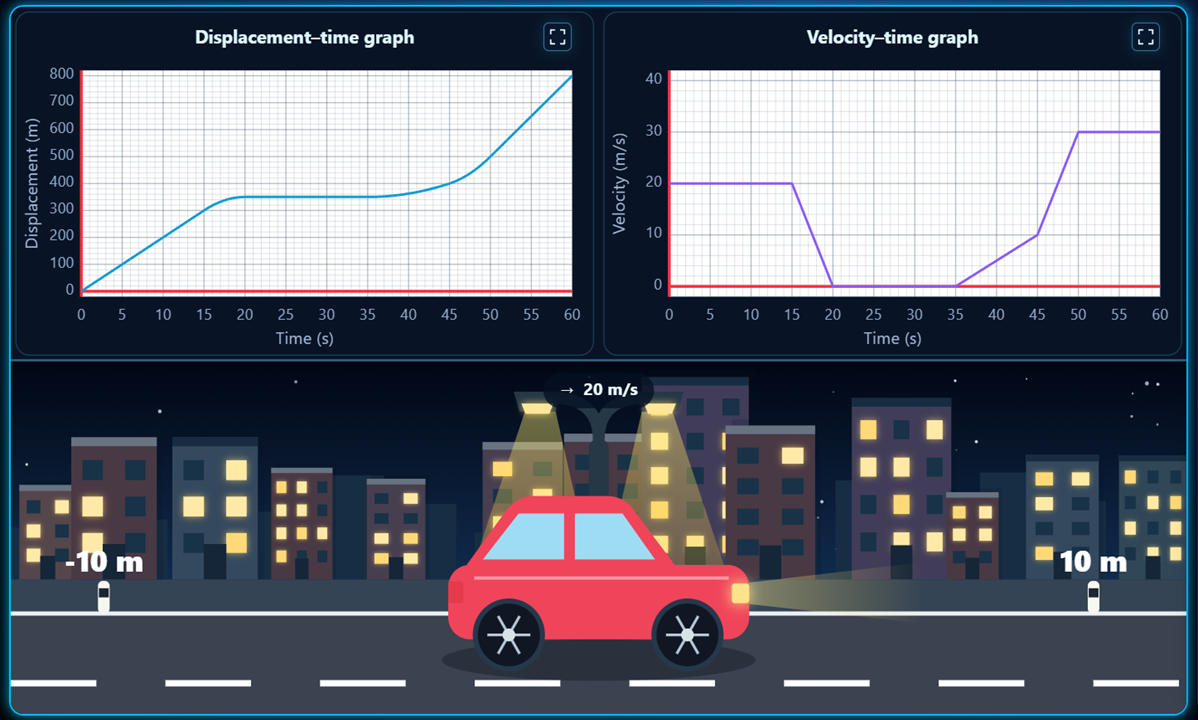
Learn how displacement-time, velocity-time and acceleration-time graphs can be used to represent the motion of a vehicle over the course of a journey. There are two modes:
- Live mode: This lets you directly control the velocity of a vehicle and record and analyse graphs of its motion.
- Planned mode: This lets you plan a journey and then see how it translates to the actual motion of a vehicle.
Oscilloscope

Generate mutliple signals then adjust their frequency, amplitude and wavelength and explore their interference. Analyse, record and play back sounds detected by the microphone, viewingf their waveform, frequency spectrum and spectrogram. Explore the wave physics of musical notes including their timbre, chords, the superposition of notes and their beats
Osmosis
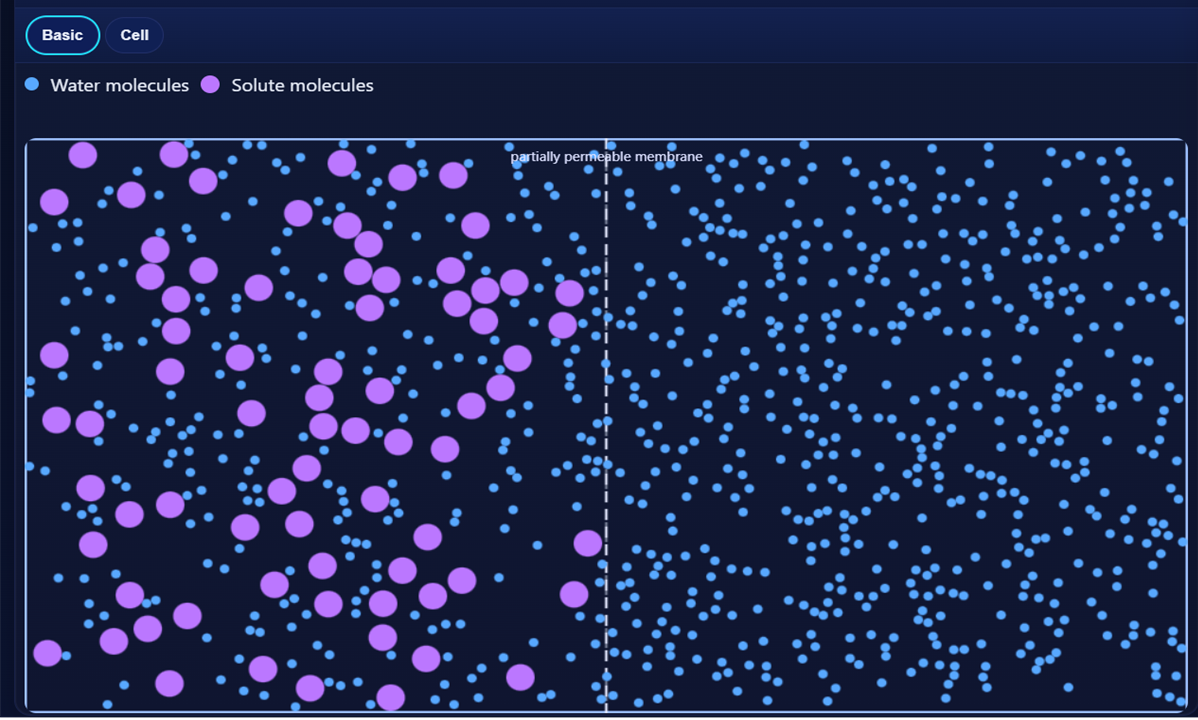
Simulate osmosis, exploring how solute concentrations, temperature and membrane permeability affect the speed and direction of water movement.
pH Scale
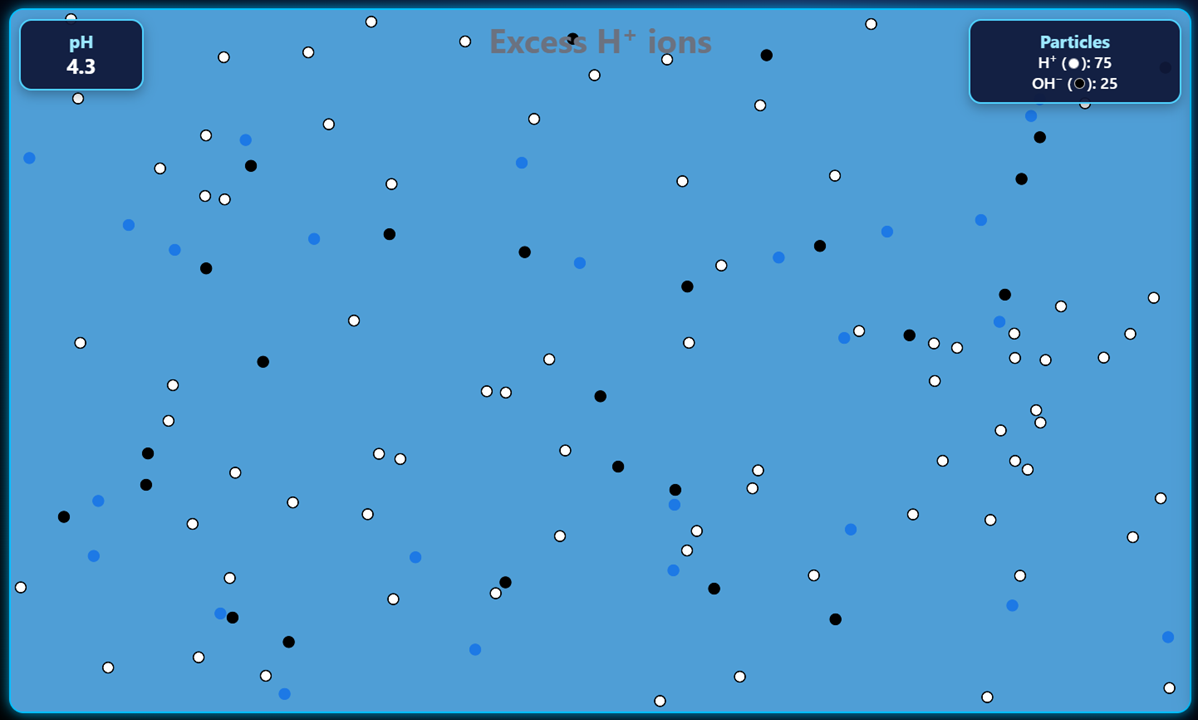
Understand the logarithmic nature of the pH scale and how pH changes during successive neutralisations. It is not intended as an accurate titration simulator but to demonstrate the concepts that underpin this.
Physics calculations
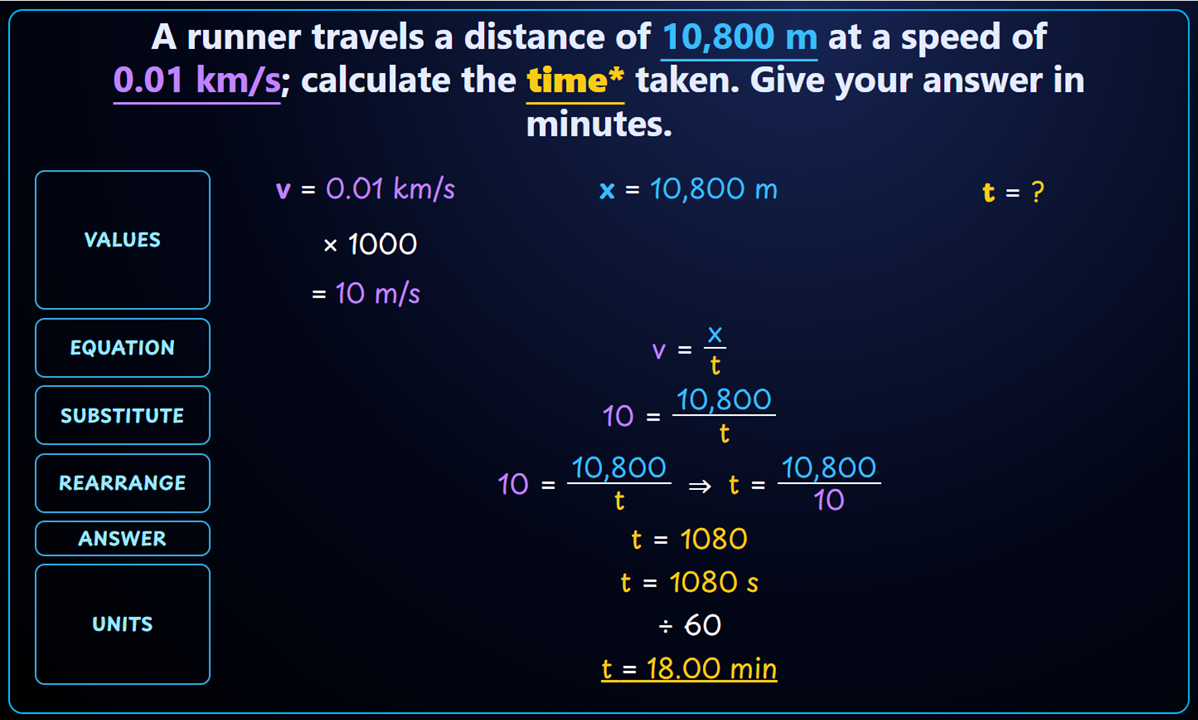
This simulation allows you to generate calculation problems for a wide range of physics calculations tailored to English KS3 and GCSE levels, but widely suitable for ages 11-16. The calculations are available in 5 difficult settings, and full workings are shown as needed.
Precipitation reactions
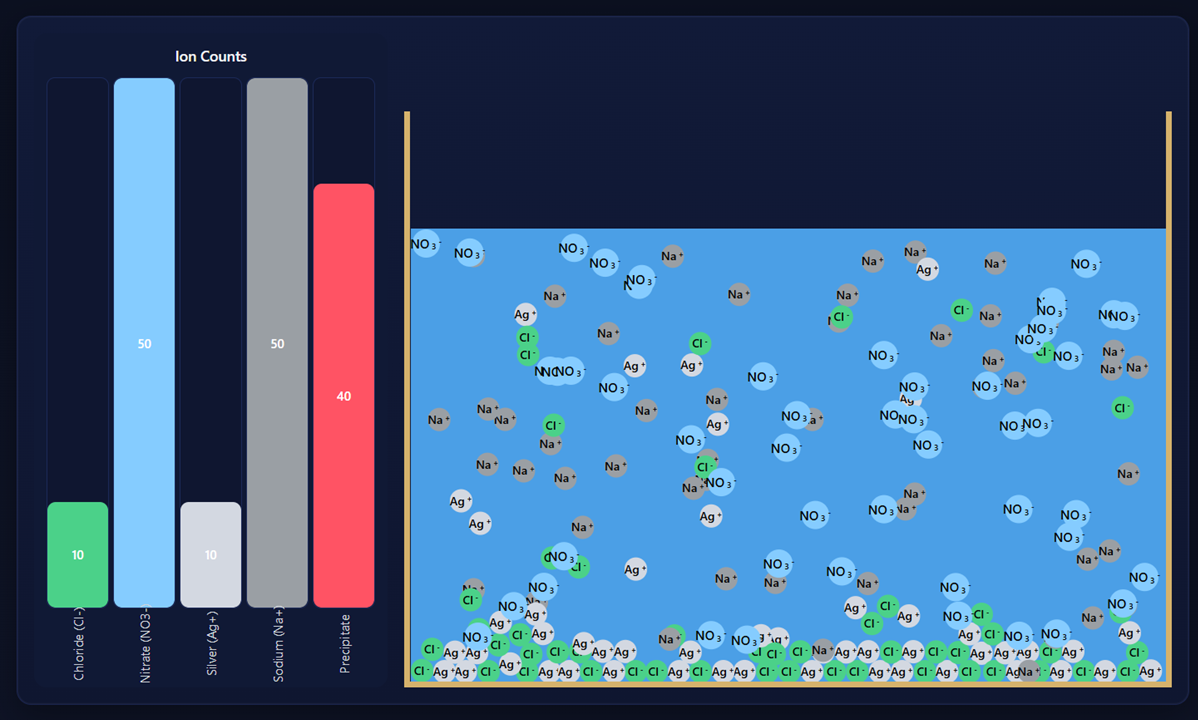
Visualise precipitate formation (or otherwise) when a wide range of ionic solutions are mixed, then explore the equations and ionic equations for these reactions.
Predator-prey relationships
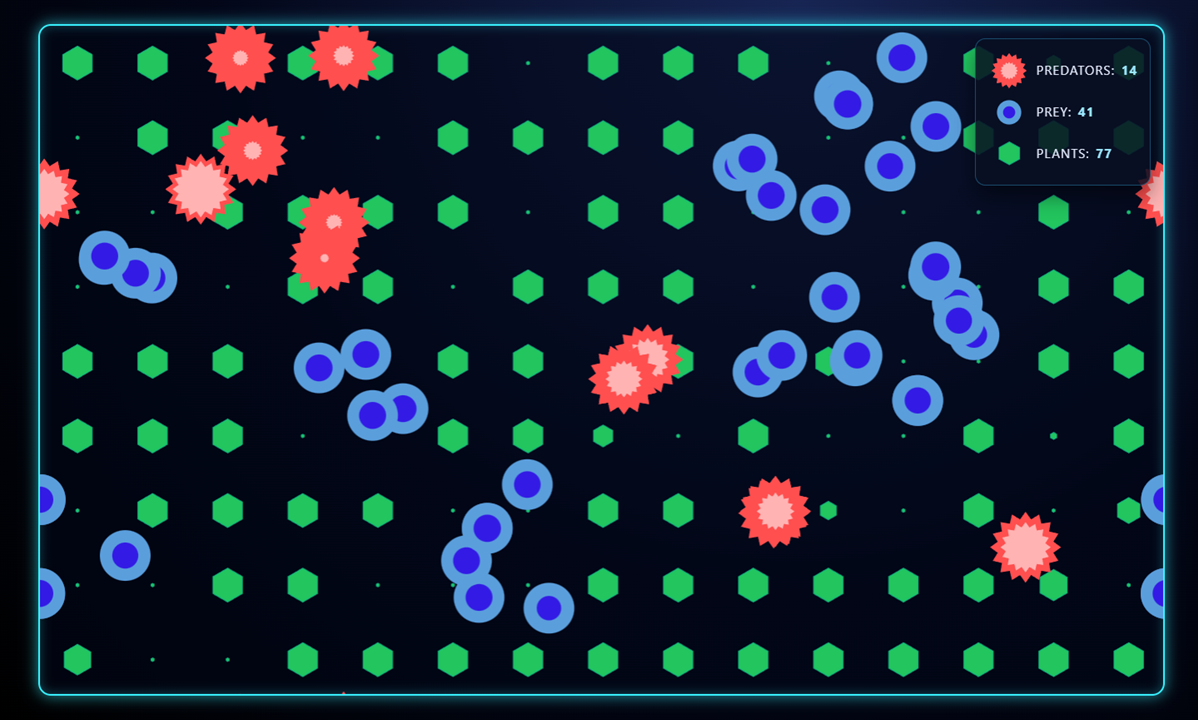
Simulate the changes in predator, prey and plant numbers in a habitat. Vary a range of factors to explore the impact on the system dyunamics, and visualise changes over time with a graph.
Radioactivity and background radiation

Explore radiation and background radiation, measuring the effect of material thickness on the absorption of radiation, and distance on the intensity of radiation. Complete an experiment to measure the activity of an object whilst taking background radiation into account.
Rates of reaction

Simulate the rate of chemical reactions and graph the outcomes. Explore the effects of concentration, surface area, temperature, pressure and catalysts on the rate of a reaction.
Refraction and total internal reflection
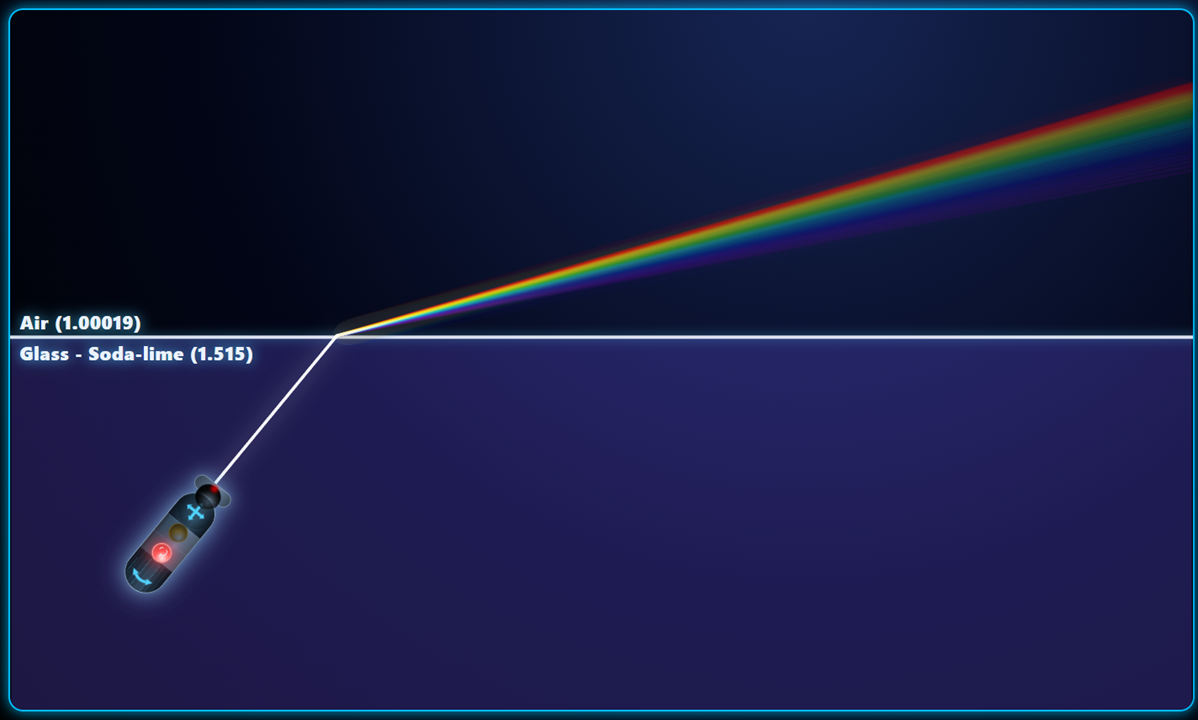
This simulation allows you to explore refraction and the related phenomenon of total internal reflection. There are three main modes: Boundary mode – Allows you to explore refraction across one or two variable boundaries; Prism mode – Allows you to explore refraction through blocks, prisms and lenses; Fibre optic mode – Allows you to explore refraction and total internal reflection in optical fibres.
Rutherford scattering

Simulate the Rutherford gold foil experiment, see how the results are only explainable with the model of a uclear atom, and see why J. J. Thomson's plum pudding model was wrong.
States of matter

Explore all aspects of states of matter including their structure and motion, state changes, heating and cooling curves and their properties.
Strong and weak acids
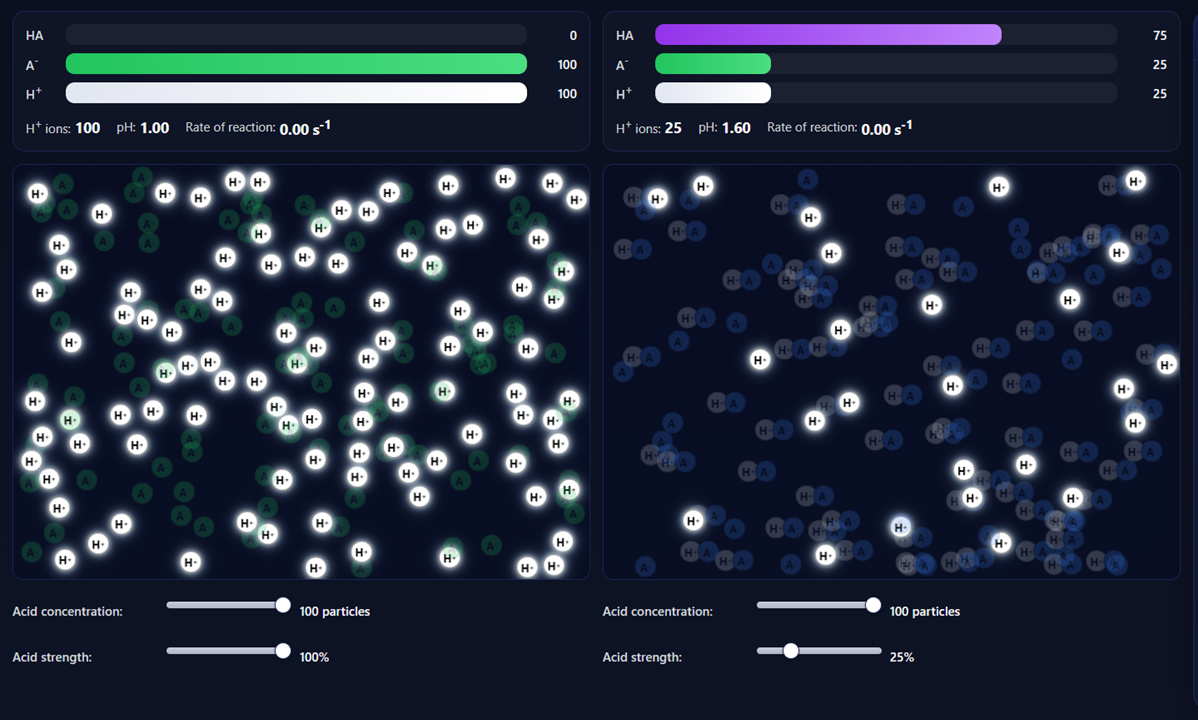
visualise the ion formation in strong and weak acids, and explore the effect of concentration and acid strength on the pH and rate of reaction
Successive ionisation energies
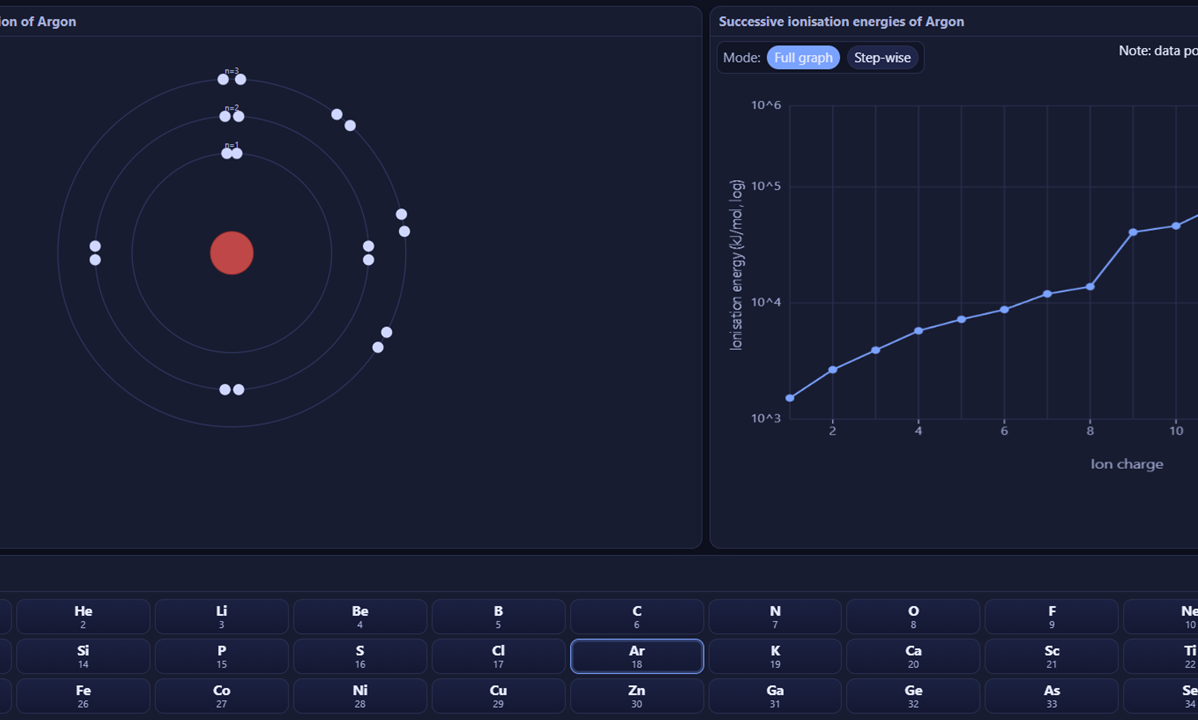
Select any of the first 36 elements and view a graph of their successive ionisation energies, including the ability to build them step-by-step and link them to their electron configurations.
Trends in the periodic table

Explore the periodicity of the periodic table, graphing or viewing a heat map of a wide range of eight important aspects of physical and chemical data.
Waves
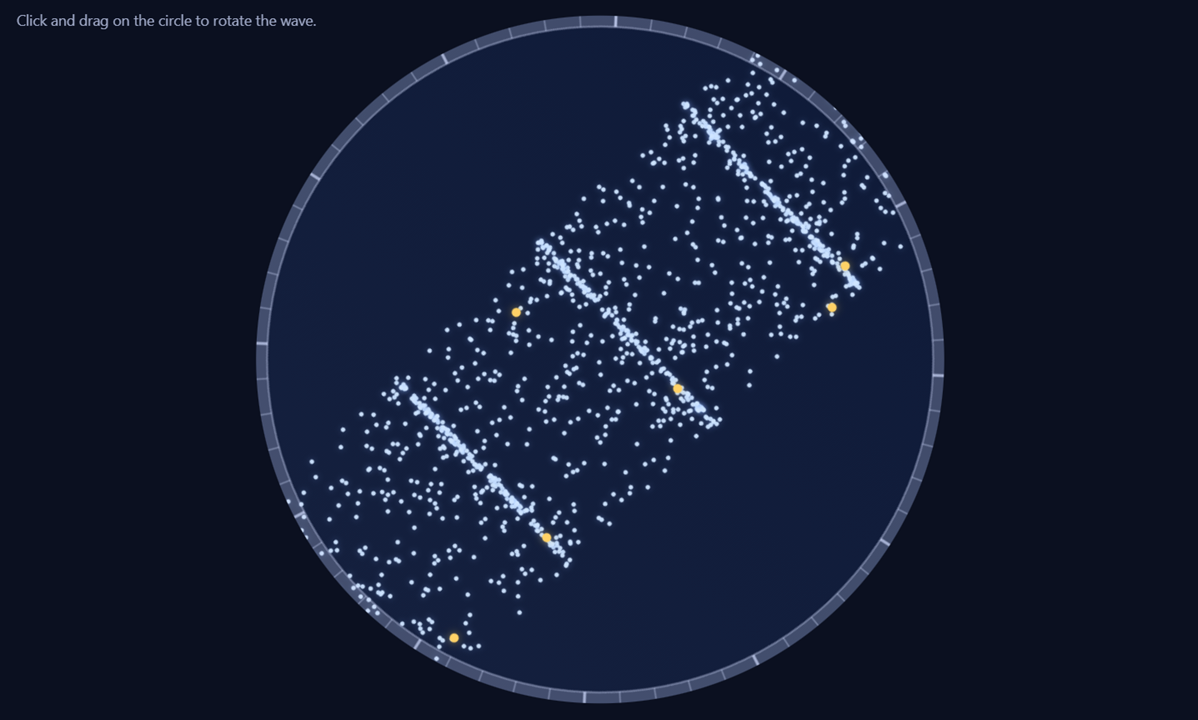
Model transverse and longitudinal waves exploring the effects of changing wavelength, frequency, speed and amplitude. Includes features for performing wave-speed experiments, and for rotating the wave animation to help combat common misconceptions
Years and seasons
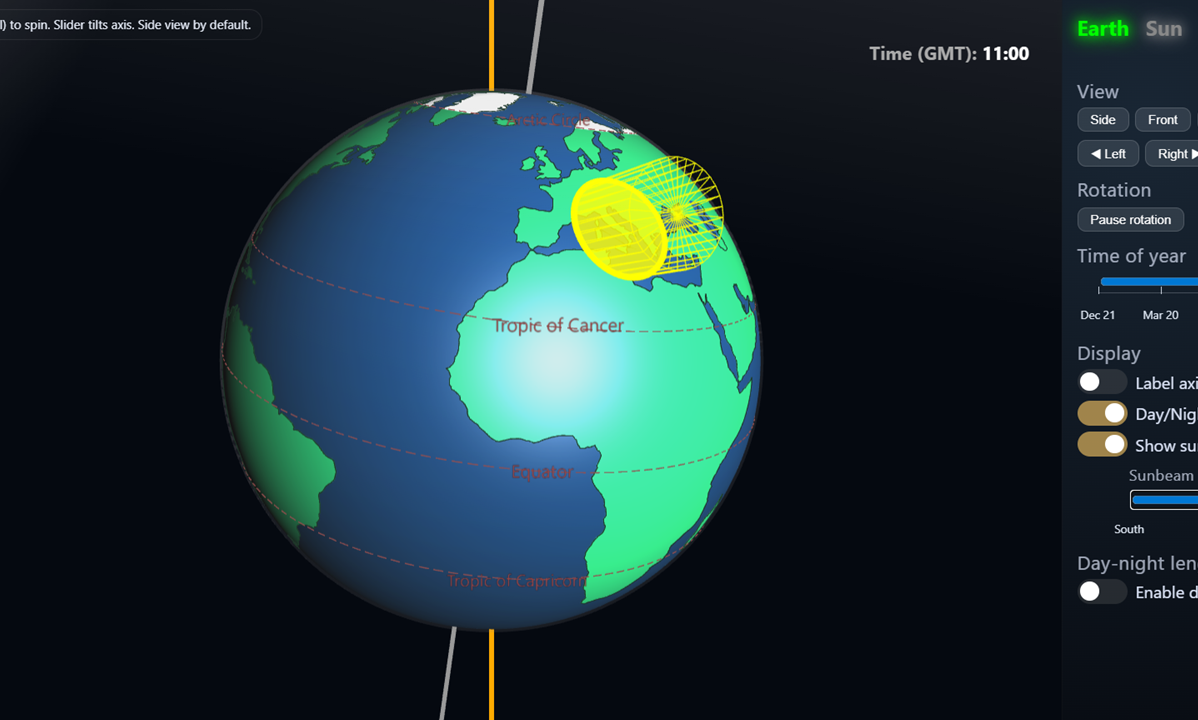
View a rotating model of the Earth and explore how the variation of axial tilt relative to the Sun causes the seasons and affects the day-length; view the Earth orbiting the Sun to see this from a different perspective.